The theme of the conference is “Empowering Resilience: Transferring Technologies into Solutions for Effective Disaster Risk Reduction,” aiming to formulate and implement diverse strategies in response to the growing challenges of disaster risks driven by climate change.
The conference seeks to foster international and interdisciplinary collaboration, utilizing emerging information technologies to enhance disaster risk assessment and reduction capacities. It will serve as a platform for researchers and professionals to expand collaborative networks, share cutting-edge achievements, and explore opportunities for joint innovation.
Organizers
State Key Laboratory of Geohazard Prevention and Geoenvironment Protection
(Chengdu University of Technology, China)
UNESCO Chair in Informatics and Multi-hazard Risk Reduction
(Loughborough University, UK)
School of Water Conservancy and Transportation
(Zhengzhou University, China)
Conference Theme
Empowering Resilience: Transferring Technologies into Solutions for Effective Disaster Risk Reduction.
Conference Sub-Themes
Sub-Theme A
Hazard Processes and Mechanism
How can advancements in our understanding of hazard processes and mechanisms lead to a better implementation of practical solutions.
A1: Experimental Techniques
A2: Advanced Field Methods
A3: Remote Sensing Techniques
A4: Citizen Science Approaches
A5: Data Uncertainty Analysis
A6: Data Monitoring and Integration
A7: Other Related Topics
Sub-Theme B
Hazard Risk Assessment and Management
How practical modelling, data-driving approaches and early warning help enhance overall effectiveness of disaster risk reduction strategies.
B1: Computational Methods and Models
B2: Data-Driven Methods and Machine Learning Techniques
B3: Hydroinformatics and Big Data Analytics
B4: Multi-Hazard Systemic Risk Assessment
B5: Forecasting and Warning
B6: Other Related Topics
Sub-Theme C
Climate Change Adaptation and Disaster Resilience
How can we develop resilient infrastructure, enhance community preparedness and integrate nature-based solutions and digital tools to strength climate resilience.
C1:Resilient Infrastructure in Hazard-Prone Regions
C2: Social Dimensions of Multi-Hazard Preparedness and Response
C3: Informatics &Technologies for CCA and DRR of Cultural Heritage
C4: Hindu Kush Himalaya Region and Climate Resilience
C5: Digital Tools for Community Engagement in Risk Reduction
C6: Resilient Practices for Climate-Adaptive Communities
C7: Nature-Based Solutions
C8: Other Related Topics
Keynote Speakers
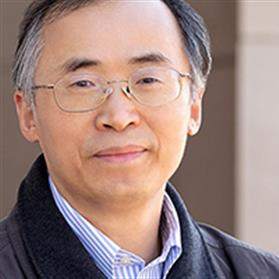
Professor Ximing Cai
Professor Ximing Cai is a Ben Chie Yen Endowed Professor at the University of Illinois Urbana-Champaign, specializing in water resources systems analysis. His interdisciplinary work bridges hydrology and economics, focusing on human-nature interactions in water management, including food-energy-water nexus, watershed planning, drought mitigation, and infrastructure resilience. He is a Fellow of the American Geophysical Union (AGU) (2019) and the International Water Resources Association (IWRA) (2024), recipient of the Julian Hinds Award (2023) of the American Society of Civil Engineers (ASCE) and the Warren A. Hall Medal (2024). He currently chairs the IWRA’s Task Force on implementing Water relevant SDGs at country/region, basin, and local levels.
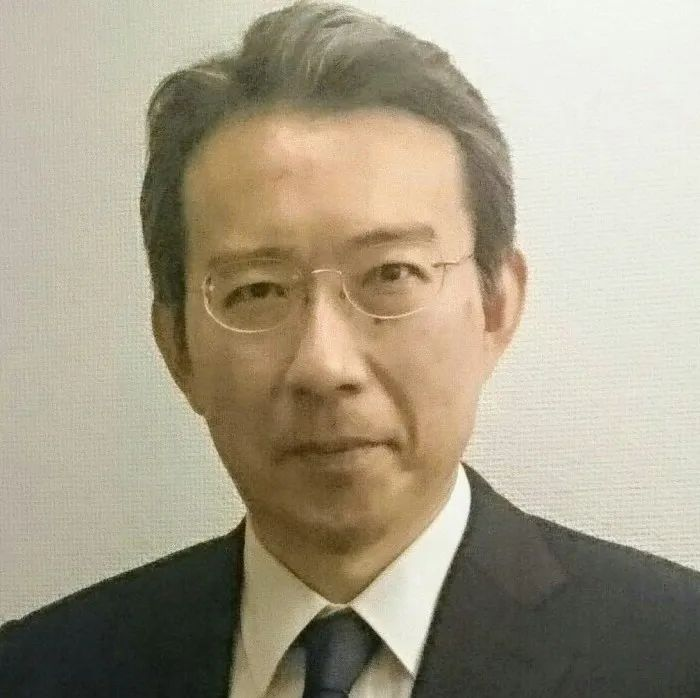
Professor Shinji Sassa
Professor Shinji Sassa is the Head and Research Director of the Soil Dynamics Group at the International Research Centre for Coastal Disasters, Port and Airport Research Institute, Japan. He is a globally recognized expert in geohazard research. His pioneering work focuses on multi-hazard interactions, especially landslides and tsunamis, scour and erosion. He has received several prestigious national awards, including the Prime Minister’s Commendation for Disaster Prevention, the MEXT Commendation for Science and Technology, and the Land Technology Development Award. His liquefaction prediction paper ranked among ASCE’s most-read in 2017, and his work on landslide-tsunami interaction is one of the most cited in the journal Landslides. Currently, he serves as the Chief Coordinator of the Submarine Geohazards Task Group of the International Union of Geological Sciences (IUGS), Acting Executive Director and Chair of the Network Committee of the International Consortium on Landslides (ICL), and Chair of the Technical Committee on Scour and Erosion of the International Society for Soil Mechanics and Geotechnical Engineering (ISSMGE). He leads several cutting-edge international research initiatives and holds significant academic influence in the field of global disaster prevention and mitigation.

Professor Stuart Dunning
Professor Stuart Dunning of Newcastle University, UK, is an internationally renowned scholar in applied geomorphology, specializing in landslides and cascading natural hazards, with a particular focus on mountainous regions. He leads the NERC-funded SUPERSLUG project, which investigates sediment-laden hazardous flows, and has pioneered the development of low-cost automatic slope monitoring methods and sensors. His interdisciplinary work bridges physical geography, hazard detection, and risk mitigation strategies.
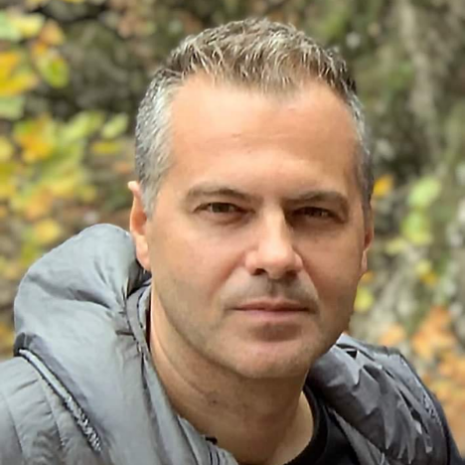
Professor Vassilis Marinos
Professor Vassilis Marinos is Associate Professor of Engineering Geology and Rock Mechanics at the National Technical University of Athens, Greece, and currently serves as President of the International Association for Engineering Geology and the Environment (IAEG) for 2023-2026. His research spans weak and complex rock masses, tunneling, landslide hazards, and pipeline-related geohazards, with over 100 publications and 2,100+ citations. He is an active member of several international editorial and technical boards and frequently delivers keynote speeches at major global conferences.