On March 31, 2024, the launch and review meeting for the "Technologies for Safe and Efficient Treatment and Use of Nonferrous Metal Mine Wastewater and Tailings Pond Discharge in the Yangtze River Basin" project was held in Chengdu. This project, spearheaded by Professor Liu Guo from the College of Ecology and Environment at CDUT, is one of the major initiatives on "Comprehensive Management of Water Resources and Water Environment in Key Basins such as the Yangtze River and Yellow River" under China's National Key R&D Programmes. The project's steering committee, led by Dorji, a member of the Chinese Academy of Engineering, featured a lineup of advisory experts including members Hou Lian and Wu Fengchang (both attending the review online), researcher Ye Hong from the Sichuan Academy of Eco-Environmental Sciences, Professor Liu Yunguo from Hunan University, senior accountant Liu Minghua from Zhongtian Hengxin International Certified Public Accountants Co., Ltd., former Director Su Kejing of the Department of Soil Ecology and Environment, researcher Xi Beidou from the Chinese Research Academy of Environmental Sciences (attending the review online), Professor Gao Dawen from Beijing University of Civil Engineering and Architecture, senior engineer Qin Meijing from Jiangxi Copper Corporation Limited, researcher Tan Zhouliang from the Chengdu Institute of Biology, Chinese Academy of Sciences, Professor Xue Shengguo from Central South University, with project tracking by Professor Zhang Yalei from Tongji University and Professor Feng Chuanping from China University of Geosciences (Beijing). This gathering of minds provided technical guidance and professional support, with CDUT's President Xu Qiang, Vice President and Standing Committee Member Hou Mingcai, along with leaders from relevant departments such as the College of Ecology and Environment and the Institute for the Development of Science and Technology. Key project personnel, including Professor Liu Guo, and subject leaders like Wei Chaoyang from the Institute of Geographic Sciences and Natural Resources Research, CAS, Professor Li Jintian from South China Normal University, Professor Lin Hai from the University of Science and Technology Beijing, and Associate Researcher Guo Chuling from South China University of Technology, attended the event.
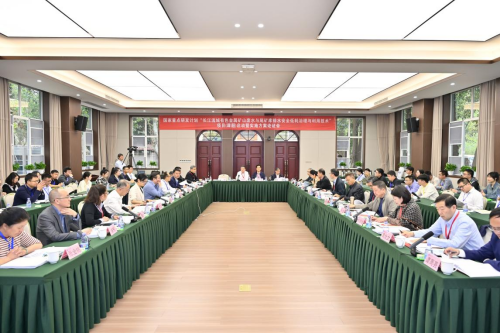
Onsite at the Project Launch & Review of the Project Plan
The initiation of the project unfolded in two distinct segments: Hou Mingcai took the helm for the opening phase, followed by Dorji steering the subsequent session. The assembly was graced with insightful addresses from Xu Qiang and Ma Hao, project director representing the Administrative Center for China's Agenda 21.
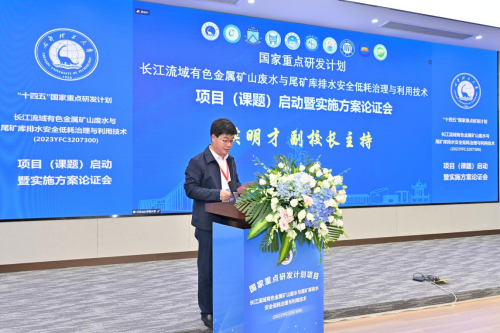
Hou Mingcai Presides over the Initial Phase of the Meeting
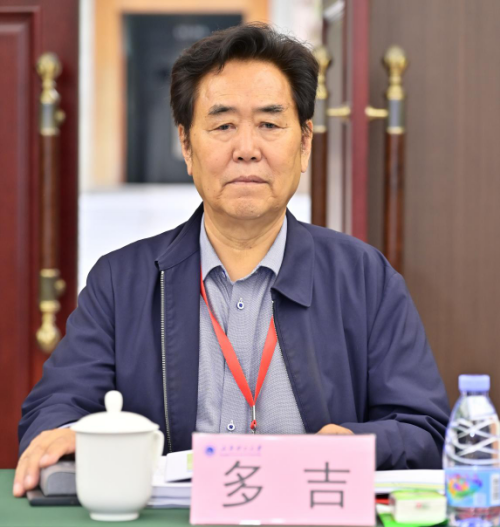
Dorji Chairs the Second Phase
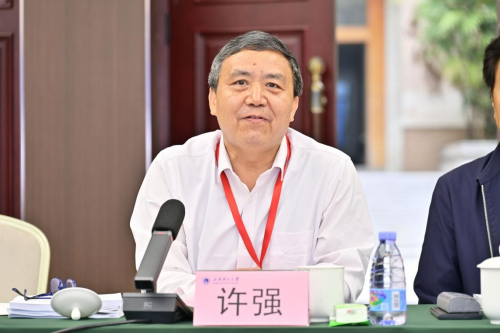
Xu Qiang Delivers A Speech
Spearheaded by CDUT, this ambitious endeavor unites a consortium of nine premier institutions, including the Institute of Geographic Sciences and Natural Resources Research, CAS, South China Normal University, University of Science and Technology Beijing, South China University of Technology, China University of Geosciences (Beijing), Southwest University of Science and Technology, Xizang Huatailong Mining Development Co., Ltd, Guangdong Jiangtong Taolin Eco-environmental Co., Ltd, and Xiangtan University. Dedicated to addressing the critical technological challenges in mitigating acid wastewater and tailings pond drainage in the Yangtze River Basin's nonferrous metal mines, the project delves into the microbial influences and pivotal factors behind acid production and heavy metal liberation across different geographical and climatic zones. The research and development efforts include plant-microbial community coupling for sulfide oxidation source stabilization and acid reduction, biomass-based multi-dimensional high-throughput blockade, and photonic-enhanced microbial coagulation oxidation for moderate treatment of mine wastewater and tailings drainage. An integrated "source reduction—ecological blockade—low-consumption management" ecological reconstruction technology system will be established. A comprehensive management platform for water pollution prevention and control in typical mining areas of the Yangtze River Basin will be created, contributing to the construction of green mines in China, supporting the high-quality development of the Yangtze River Economic Belt and the Yangtze River Conservation efforts, aiding the "Beautiful China, Sustainable Development" initiative, ensuring the smooth implementation of national key strategies, and serving the significant demands of national ecological civilization construction.
Liu Guo outlined the project's blueprint, delving into the research's foundation and pivotal challenges, the detailed breakdown of tasks, anticipated results alongside groundbreaking innovations, the expertise of the research team, the foundational work, and the strategic planning and financial projections. Each of the five project heads then provided an in-depth exploration of their specific segments, touching on the rationale, performance metrics, execution strategies, yearly agendas, and the frameworks for organizational governance.
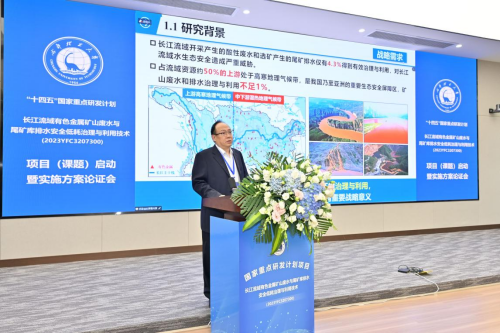
Liu Guo Delivers a Detailed Presentation on the Project Plan
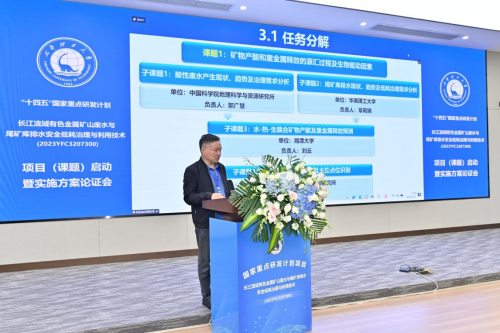
Wei Chaoyang Presents the Project Plan for Topic One
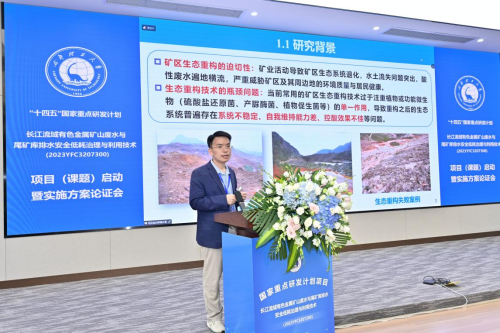
Li Jintian Presents the Project Plan for Topic Two
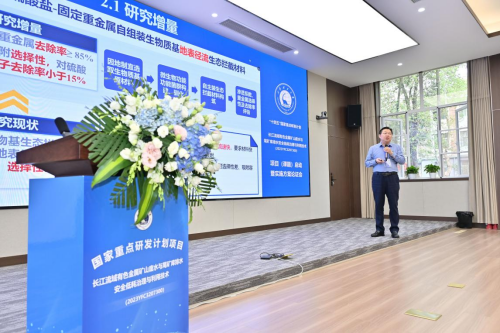
Lin Hai Presents the Project Plan for Topic Three
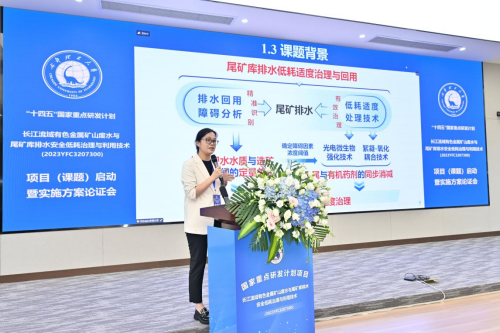
Guo Chuling Presents the Project Plan for Topic Four
The panel of experts lauded the project's comprehensive implementation strategy and its foundational groundwork, collectively endorsing the project's well-defined objectives, precise scientific inquiries, extensive research agenda, and pragmatic technological roadmap. The implementation strategy received unanimous approval for proceeding past the review phase. Moreover, the experts underscored the importance of deepening the analysis of the Yangtze River Basin's nonferrous metal mine wastewater and tailings pond drainage characteristics, advocating for a targeted enhancement of material and technological applicability and specificity.
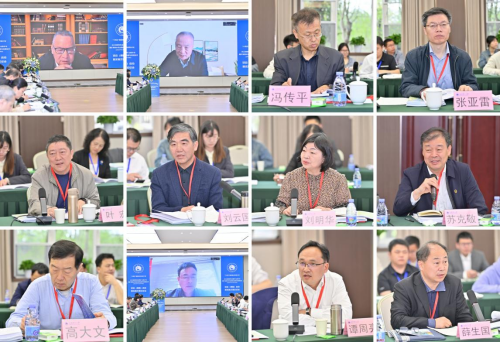
Insights from the Expert Panel
In response to the insightful recommendations from the expert panel, the project team embarked on rigorous internal deliberations and initiated specialized training sessions aimed at bolstering financial and project management practices.
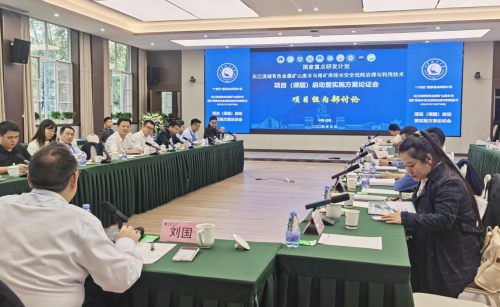
Internal Discussion by the Project Team
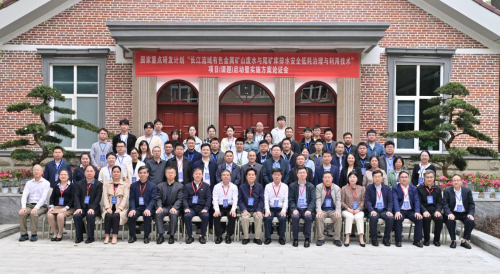
Group Photo with Expert Representatives