On December 29, the 2019 annual conference of the national key R&D program project “Research on Disaster Mechanism and Long-term Effect of Severe Geological Disasters in Mountainous Areas with Frequent Strong Earthquakes” (2017YFC1501000) was successfully held in conference room 3 of the administrative building of CDUT. At the meeting, 10 organizations including project leaders and technical experts were invited, totaling more than 60 people, including Xu Qiang, vice president of CDUT, Wang Gonghui, Professor of Kyoto University, Li Xiti, Professor of National Central University, Prof. Fan Xuanmei and Prof. Tang Chuan of CDUT, project leader Prof Pei Xiangjun of CDUT, Pricipal Investigator Prof Wang Yunsheng of CDUT, Prof. He Siming of Institute of Mountain Hazards and Environment,CAS, and Prof. Yue Dongxia of Lanzhou University.
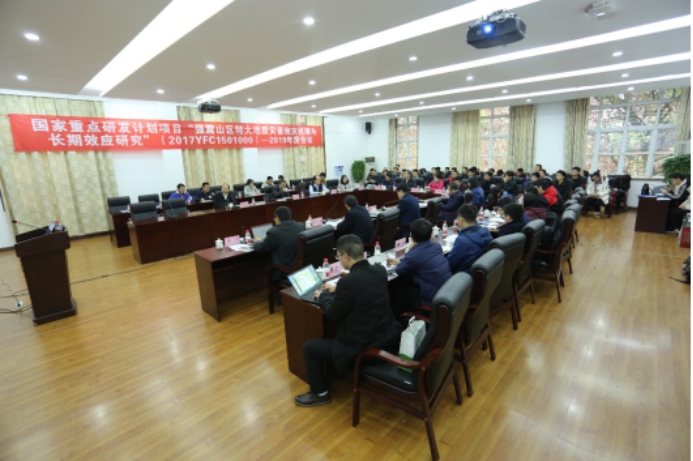
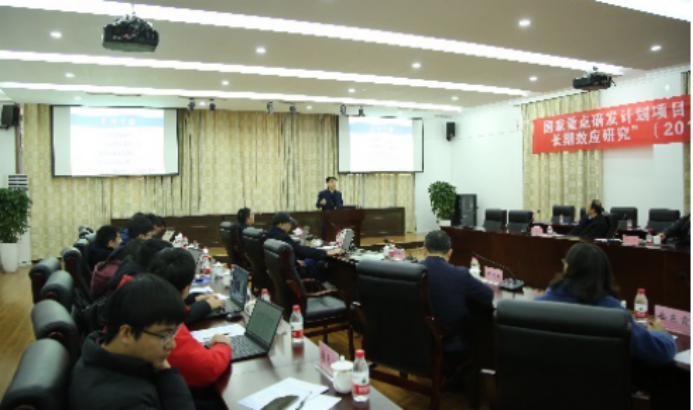
Conference Site
In the morning meeting, Professor Pei Xiangjun, the project leader, first introduced the research background, research objectives and annual plan of the project, then focused on the overall progress and completion of the project, and summarized the innovation results. After listening to Professor Pei's report, the experts at the meeting raised questions on relevant details, held in-depth discussions on the overall plan, objectives and key research tasks of the project, fully affirmed the rich achievements of the project, sorted out the possible deficiencies of the project, and put forward practical suggestions. Prof. Xu Qiang pointed out that the overall objective and core research tasks of the project should be closely focused, and the industrialization of disaster reduction products and demonstration and promotion of the base should be promoted with the guidance of solving the key scientific problems of the disaster-causing mechanism and long-term effects of catastrophic geological disasters in mountain areas prone to strong earthquakes. Prof.Wang Gonghui and Prof.Li Xiti said that the research results of Wenchuan earthquake area should be applied to the Qinghai-Tibet Plateau, so as to solve key scientific problems in the industry. Prof.Fan Xuanmei pointed out that on the basis of the existing research, we should focus on the scientific research projects that are about to produce results and ensure the completion of the project with higher quality.
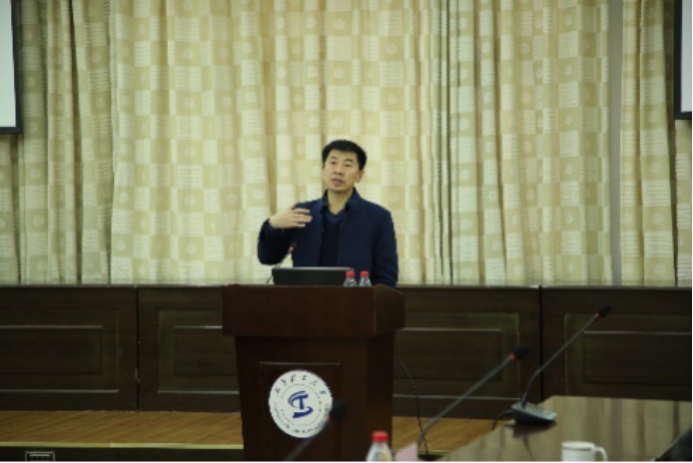
Project Leader Prof.Pei Xiangjun reported the overall progress of the project
In the afternoon meeting, the project leader reported on the supporting facilities, research progress, data sharing, fund use, cooperation and communication and 2020 work plan for this year, focusing on 5 aspects: the development and distribution laws of seismic geological disasters with different fracture activity modes and the establishment of databases, the construction of debris flow prediction platforms in small watersheds, the dynamic evolution and long-term effects of post-earthquake geological disasters in regions prone to strong earthquakes, the monitoring and early warning of typical geological disaster chains and the research and development of equipment, and the mechanism of catastrophic landslides caused by strong earthquakes.
In the discussion of project management, the project leader, Prof. Pei Xiangjun, asked the leaders of all sub-projects to further strengthen cooperation and exchange and resource sharing in accordance with the overall objectives of the project, so as to speed up the implementation of research work; the person in charge should pay close attention to the task of research, report to the leader in time when encountering problems, solve problems in time and break through technical difficulties, so as to ensure the smooth implementation of the project and the completion of high quality.
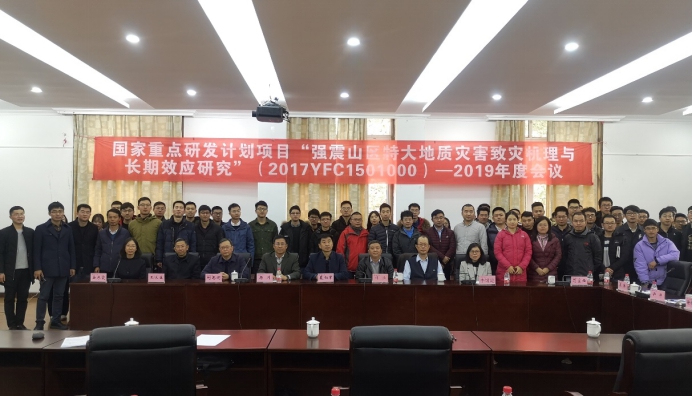
Photo taken at the 2019 Annual Meeting