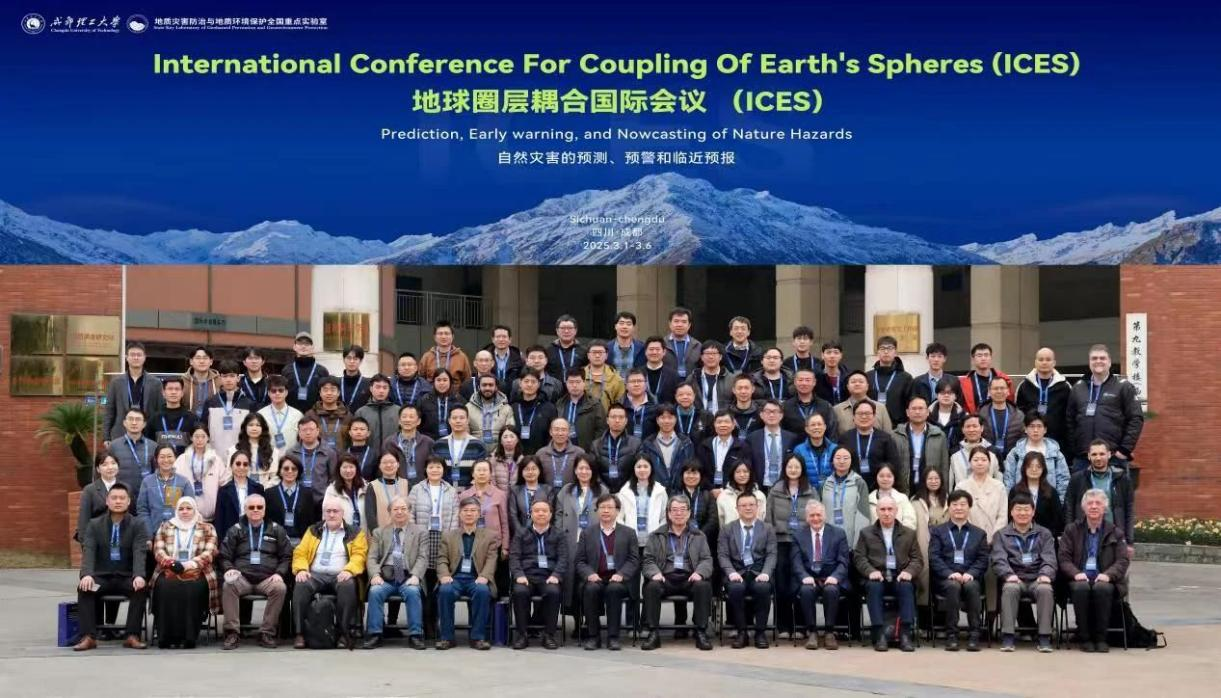
The inaugural International Conference for Coupling of Earth’s Spheres (ICES) was grandly launched at Chengdu University of Technology (CDUT) from March 1 to March 7, 2025, with a theme of “prediction, early warning, and nowcasting of nature hazards.” The conference brought together notable scholars and experts, including President Xu Qiang of CDUT, Vice President Hattori of Chiba University, as well as representatives from the National University of Defense Technology, Harbin Institute of Technology, Jilin University, Central South University, China University of Geosciences (Wuhan), Earthquake Administration of Xinjiang Uygur Autonomous Region, and Sichuan Earthquake Administration.
Jointly organized by CDUT, Leshan Normal University, Southwest Jiaotong University, China West Normal University, the Sichuan Astronomical Society, and the Daocheng High-Altitude Astronomy Science Center, the conference has garnered considerable global interest since its inception.
Bringing together 120 leading scientists from 14 countries and regions, the gathering served as a platform for the exchange of cutting-edge research on coupling of Earth’s spheres and nature hazard prevention. By fostering interdisciplinary collaboration, the event aimed to inject fresh impetus into the field and drive meaningful advancements.
China’s vast and diverse terrain makes it one of the most disaster-prone countries in the world, frequently experiencing earthquakes, floods, landslides, and mudslides. These disasters pose significant threats to human lives and economic sustainability.
In light of this, enhancing the country’s disaster resilience has become a pressing priority. Central to these efforts is the advancement of geological hazard research and forecasting, which plays a crucial role in strengthening national preparedness and response mechanisms.
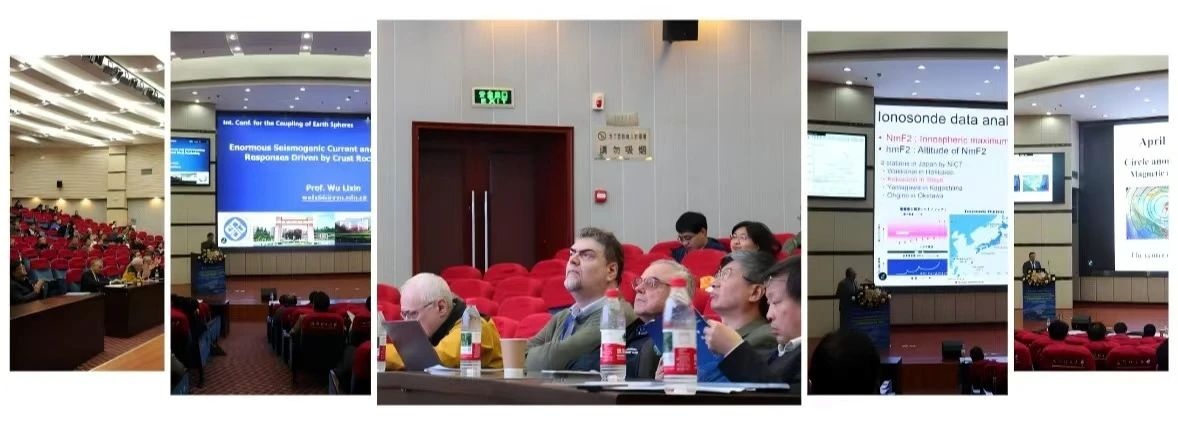
The conference placed special emphasis on both terrestrial and extraterrestrial hazards, covering earthquakes, volcanic eruptions, and landslides, alongside solar storms and geomagnetic disturbances. Scientists delved into the complex interactions between different layers of the Earth system, exploring cross-disciplinary physical mechanisms and cutting-edge monitoring and early warning technologies. These discussions aimed to lay a solid scientific foundation for disaster prevention, offering strong theoretical and technological support for global efforts in disaster management.
One of the event’s highlights was CDUT’s pioneering work in earthquake forecasting. The university’s research team, leveraging deep academic expertise, rigorous methodology, and innovative approaches, has successfully predicted multiple earthquakes with remarkable accuracy. This achievement has cemented CDUT’s position as a global leader in the field.
At this conference, CDUT shared and promoted its latest advancements in earthquake forecasting with the global scientific community. These achievements not only provide reliable technological support for China’s disaster response but also serve as a valuable reference for international disaster management efforts.
The International Conference for Coupling of Earth’s Spheres (ICES) aspires to propel the research of geoscience to new heights, foster closer international collaboration, and contribute to the creation of a safer, more sustainable world.
This conference is expected to leave a significant mark on the field of geoscience, bringing fresh momentum to global disaster prevention and ushering in a new era of research on Earth sphere coupling and nature hazard mitigation.