From December 8 to 11, 2024, Fan Xuanmei, director and researcher of the State Key Laboratory of Geohazard Prevention and Geoenvironment Protection, led a delegation to Kathmandu, Nepal, for a research visit. The primary aim of this visit was to strengthen collaborations with international organizations, present the laboratory’s advancements in geological hazard prevention and monitoring, and explore new opportunities for cooperation in research, technology, and talent development with the International Centre for Integrated Mountain Development (ICIMOD) and other global partners.
Active Engagement in High-Level Forum: Addressing Disaster Risk Management in the Hindu Kush Himalaya Region
The delegation attended the HKH DRR Hub: Building a safer HKH through early warnings for all hosted by ICIMOD from December 9 to 10. During the opening ceremony and thematic sessions, several key recommendations were put forward. Fan Xuanmei participated in a roundtable discussion, where she provided an in-depth analysis of the challenges and solutions surrounding “Monitoring and Early Warning Systems: Bridging the Science-Policy-Application Interface at Global and Regional Scales.” Additionally, Fan delivered a keynote address titled Status Quo of Geological Hazard Monitoring and Early Warning in China, in which she outlined China’s experiences and achievements in advanced geological hazard monitoring technologies, risk management practices, and data sharing initiatives. This presentation further bolstered the laboratory’s global profile and influence in the field.
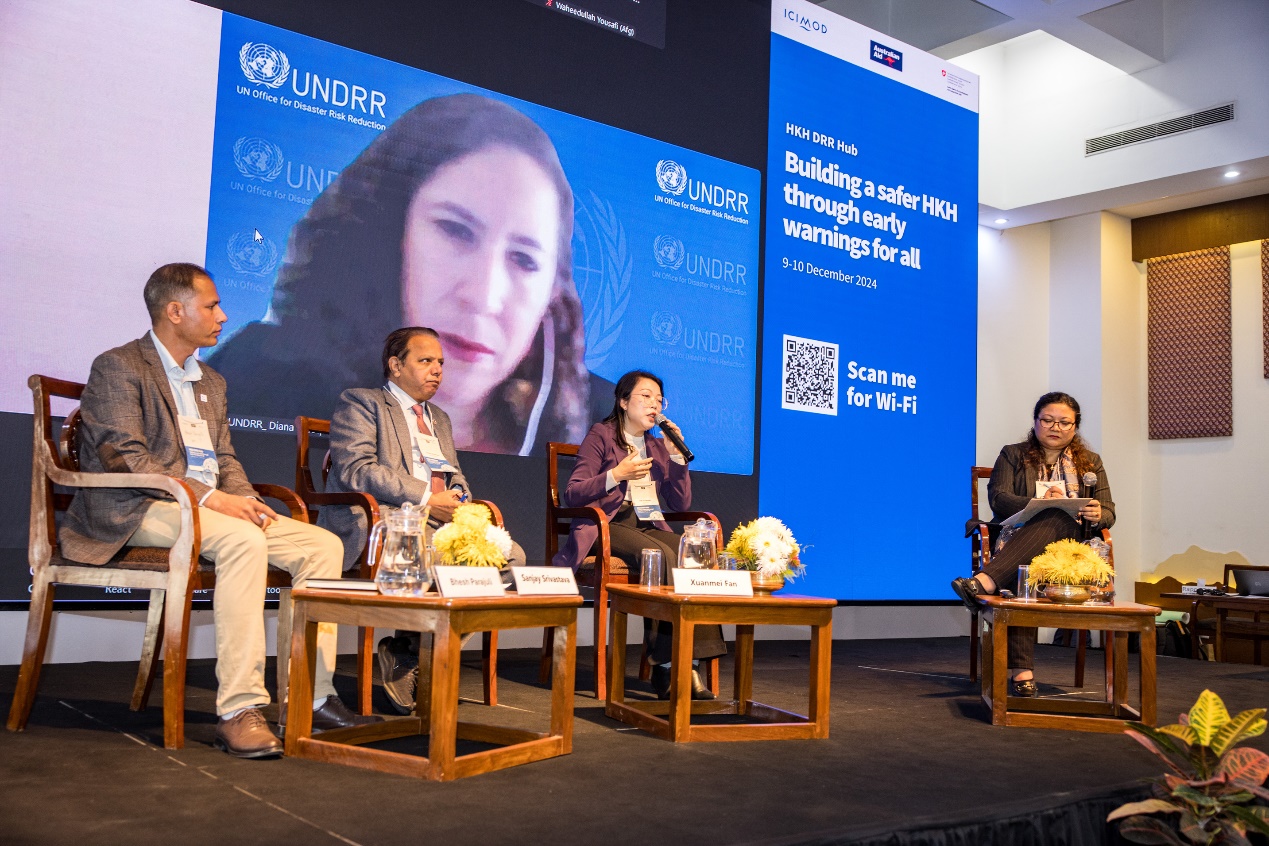
Fan Xuanmei participating in thematic session
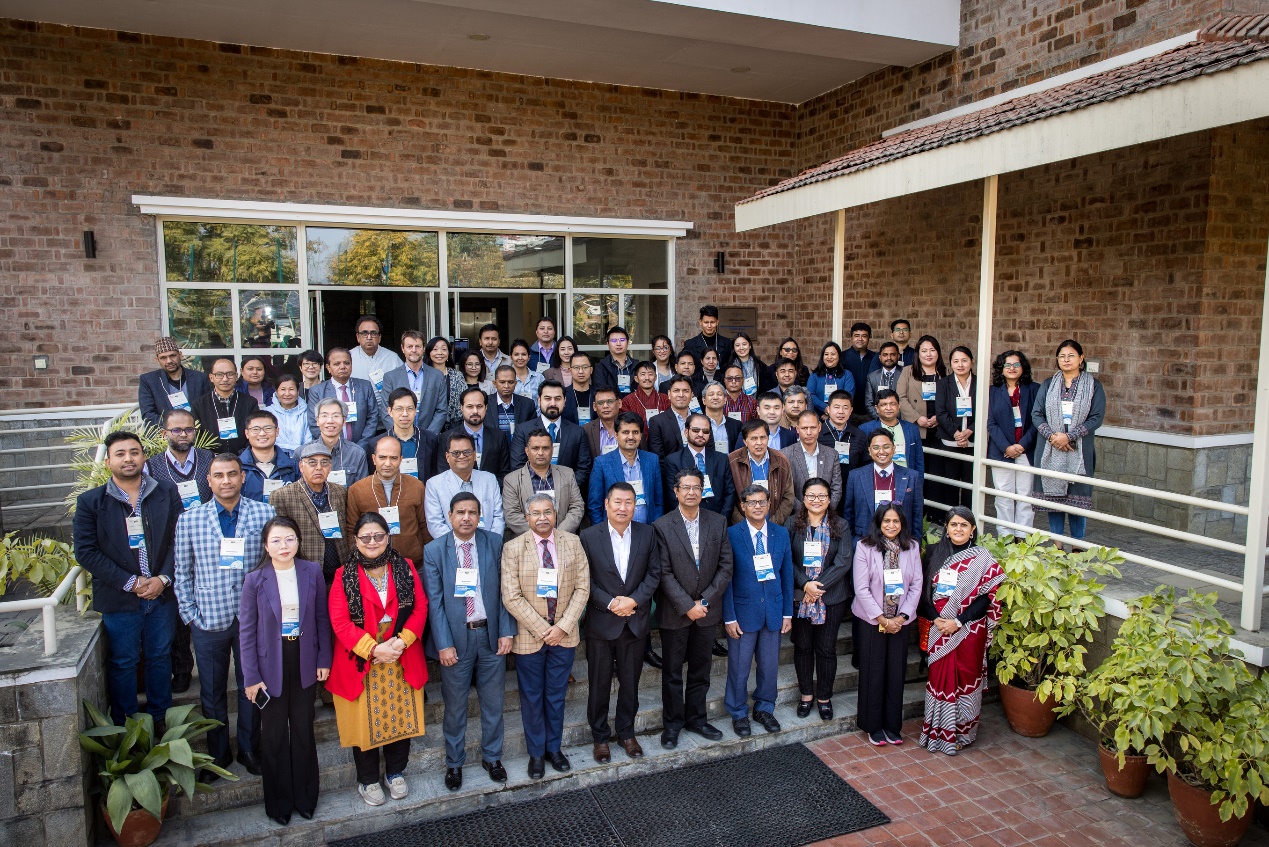
The delegation engaging in the HKH DRR Hub
Exploring Future Opportunities for Collaboration with ICIMOD
The delegation further engaged in discussions with Pema Gyamtsho, director of ICIMOD, during which the laboratory’s overview and international cooperation initiatives were presented. Both parties reached a consensus that ICIMOD would serve as the host organization for the International Symposium on Mega Earthquake Induced Geo-Disasters and Long-term Effects (MEGE) in 2025 and would dispatch research and technical personnel to participate in the iRALL School. The two sides also explored the potential for formalizing cooperation through a Memorandum of Understanding (MOU) and supporting the laboratory’s efforts to deploy self-developed monitoring instruments and equipment in Nepal and Bhutan. This would involve establishing demonstration monitoring sites, thereby advancing the local application of technology and equipment.
Subsequently, the delegation engaged in detailed discussions with ICIMOD’s “Cryosphere and Water Resource Risk Management” team. The delegation outlined the laboratory’s monitoring activities on the Qinghai-Xizang Plateau, while ICIMOD provided insights into the glacier lake outburst incident in Thame Village, Nepal, which occurred on August 16 of this year. They analyzed the event, which was triggered by a rapid increase in temperature, leading to a dam failure. The resulting flood displaced 40 children in the downstream area, prompting ICIMOD to immediately launch a field investigation. Both parties agreed on the importance of exploring the installation of monitoring equipment in the affected area to provide technical support to Nepal.
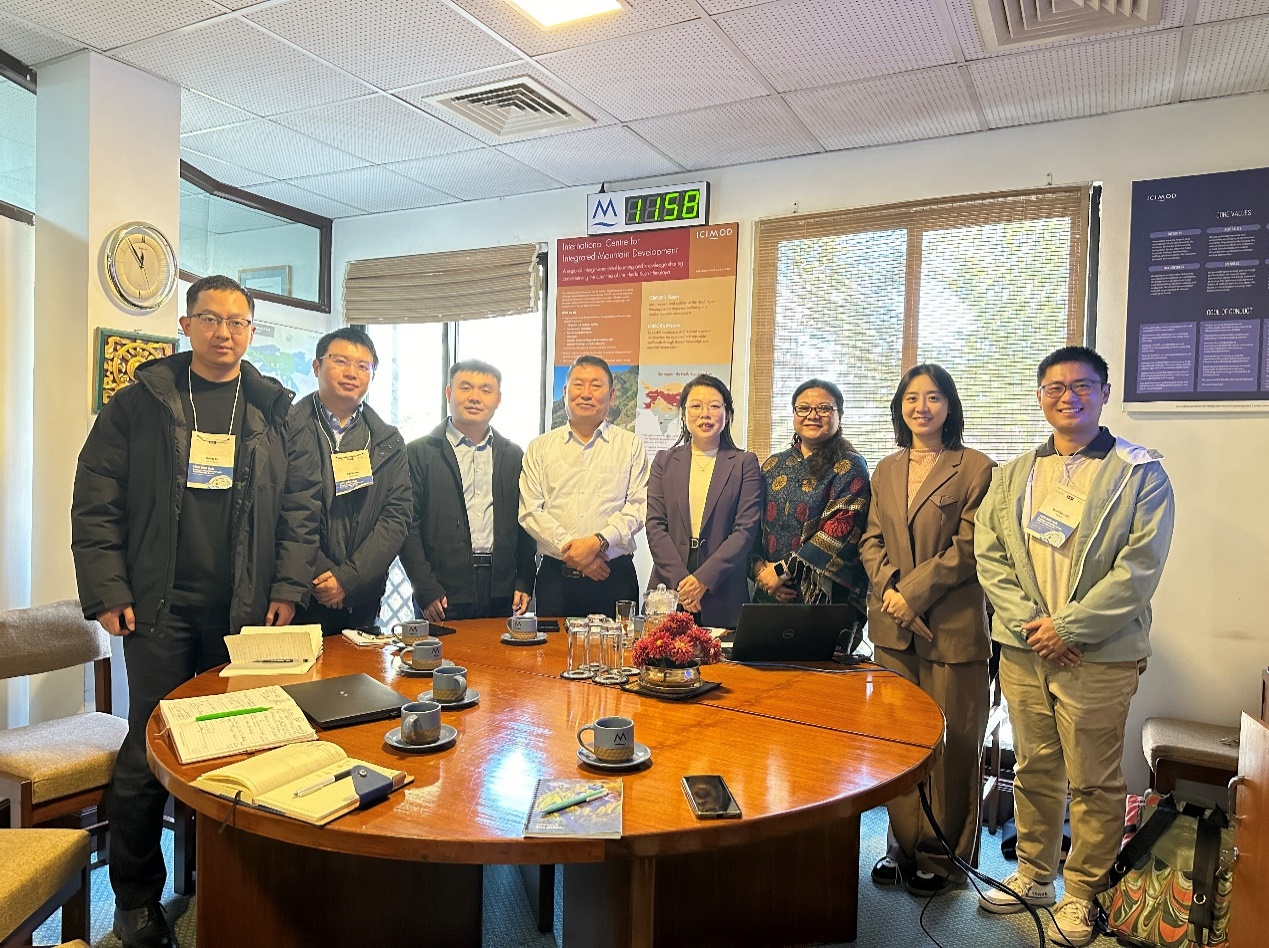
The delegation holding meeting with the director of ICIMOD
Advance International Cooperation and Formulate a New Blueprint for Regional Disaster Reduction
The delegation also visited Tribhuvan University, where Fan Xuanmei delivered the inaugural lecture of the Paul Marinos World Tour, hosted by the International Association of Engineering Geology and the Environment (IAEG). During the visit, the delegation introduced the laboratory’s profile and engaged in in-depth discussions on research project collaboration and academic exchanges with Professor Dinesh Pathak, head of the Central Department of Geology, along with Professors Ranjan Kumar Dahal and Basanta Raj Adhikari. The laboratory will play a key role in co-organizing the 15th Asian Regional Conference 2025, set to take place in Kathmandu in November 2025, and will oversee local field investigations. This initiative will not only foster academic exchange but also offer invaluable field experience to enhance regional disaster reduction efforts.
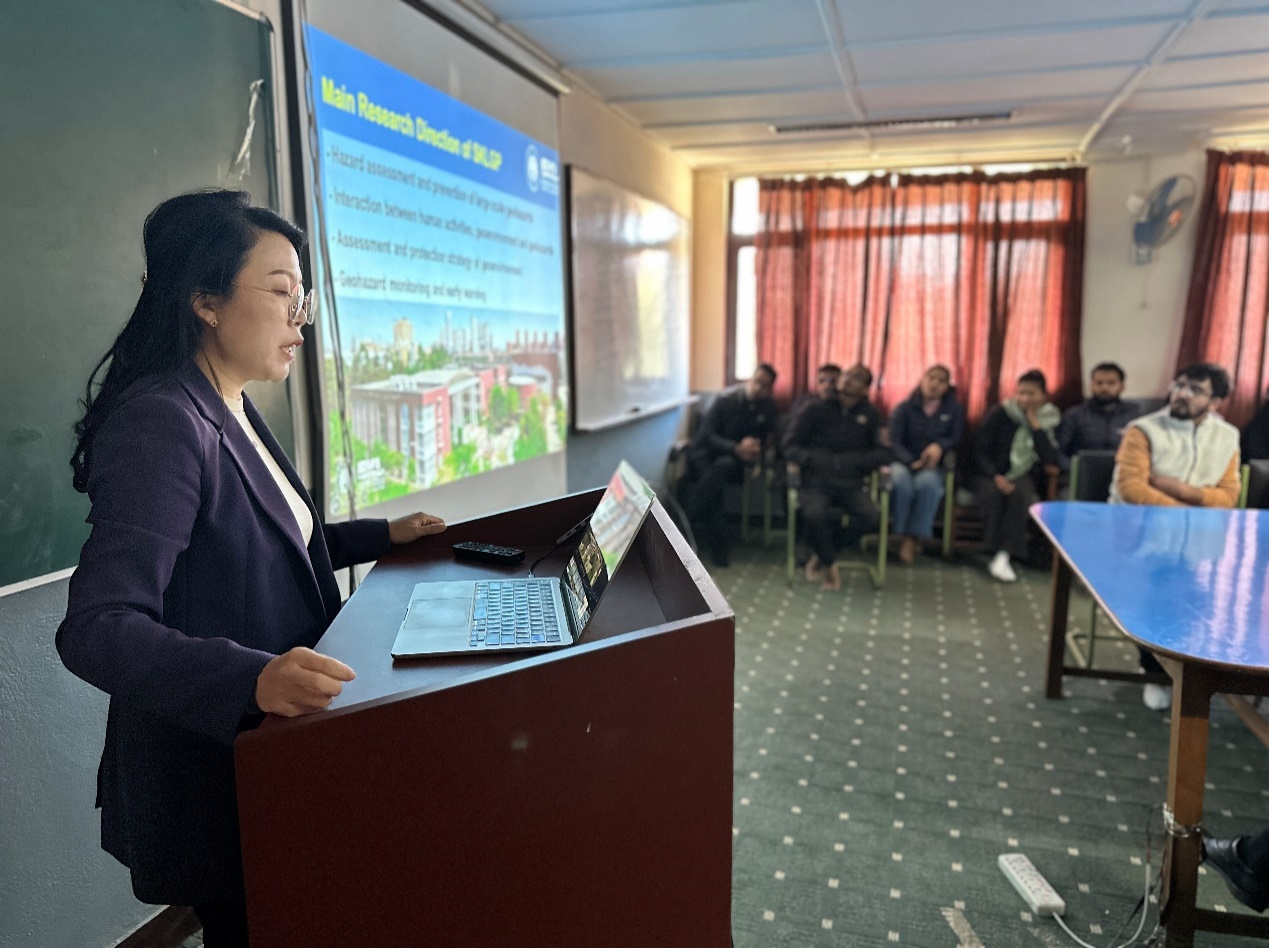
Fan Xuanmei delivering the inaugural lecture of the Paul Marinos World Tour
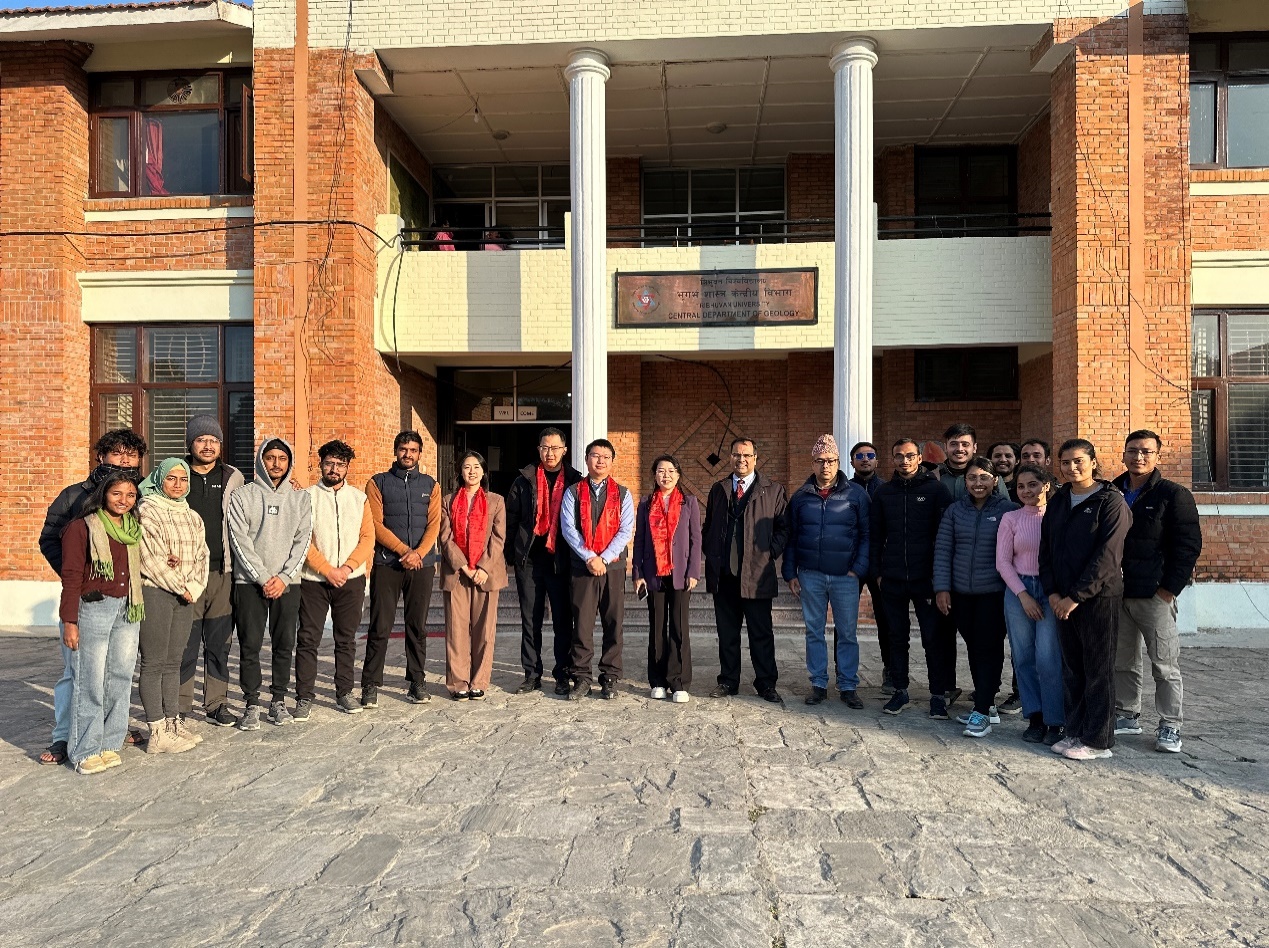
Group photo of faculty and students from the Central Department of Geology at Tribhuvan University and the delegation
This visit has further solidified the laboratory’s academic connections with international organizations such as ICIMOD, while providing “Chinese wisdom” and technological solutions for regional disaster risk management. The laboratory will continue to proactively engage in international cooperation, advancing the development and application of early warning technologies for disasters, thereby making a significant contribution to global disaster risk reduction.