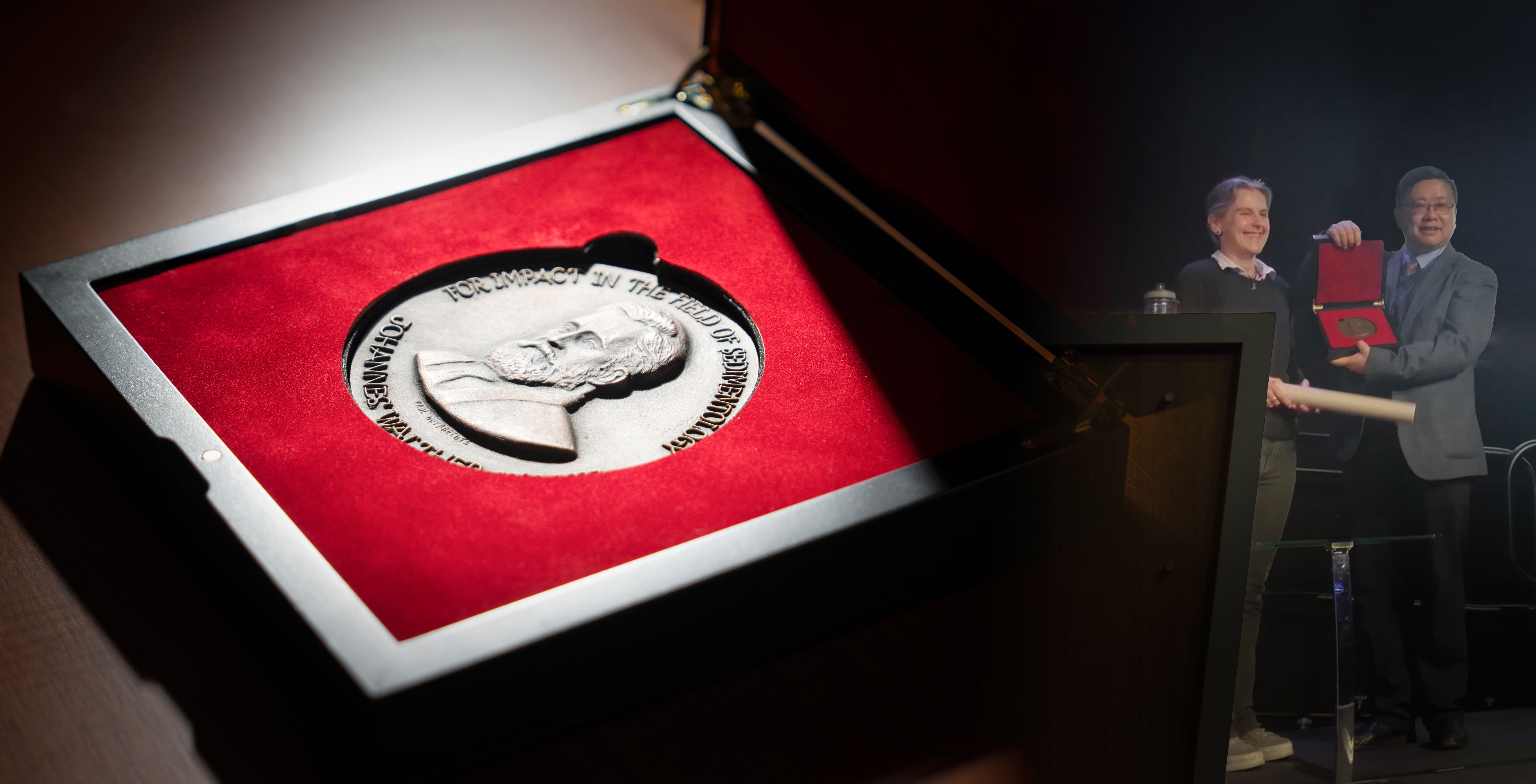
Billions of years ago, oxygen atoms in Earth’s ancient atmosphere were quietly “locked” into rocks through oxidation. After years of painstaking effort, Professor Li Chao’s team at CDUT managed to extract those atoms from thousands of rock samples. In 2025, they published their findings in Nature, unveiling for the first time the mystery of how Earth’s early atmosphere and oceans underwent synchronized oxidation. Reviewers hailed the study as “the best indicator record to date of atmospheric oxygen evolution,” calling it “a new benchmark in the study of Earth’s oxidation history, which will have lasting impact across multiple disciplines.”
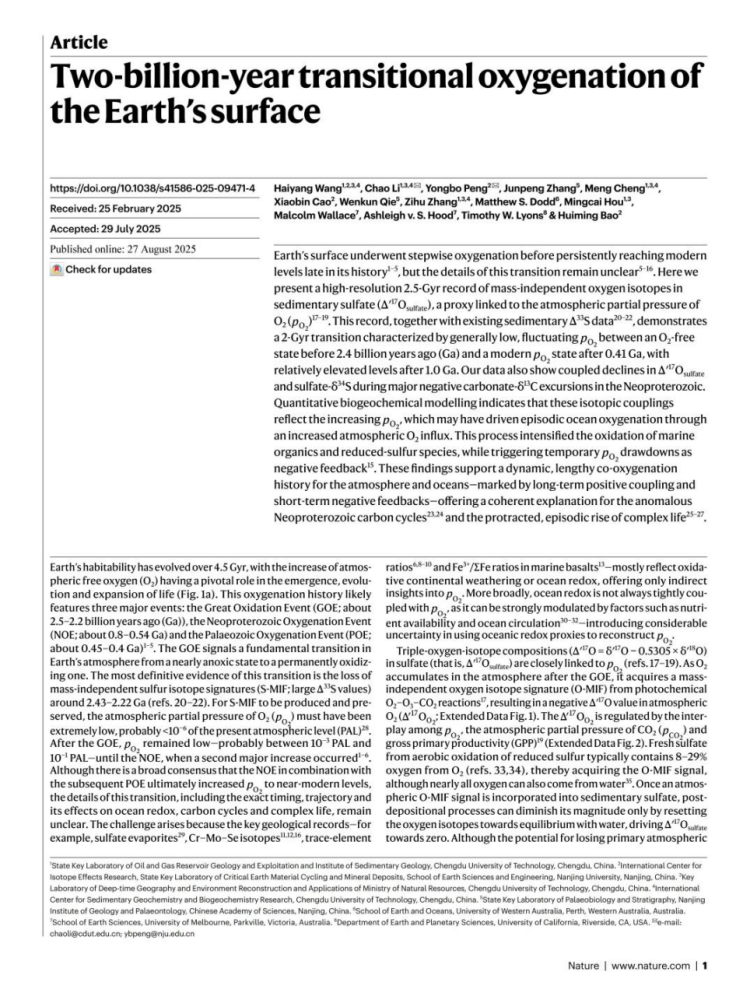
Front Page of the Paper
This paper marks the team’s second appearance in a top-tier journal within two years. In 2023, they also published in Nature with the article Uncovering the Ediacaran Phosphorus Cycle.
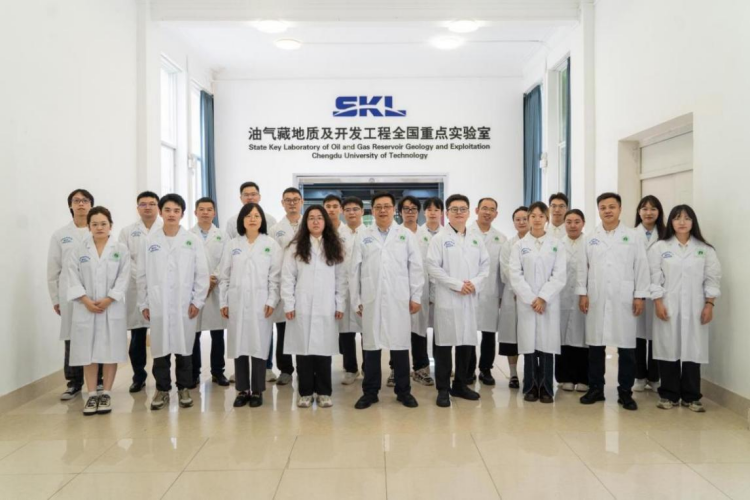
Professor Li Chao’s Team
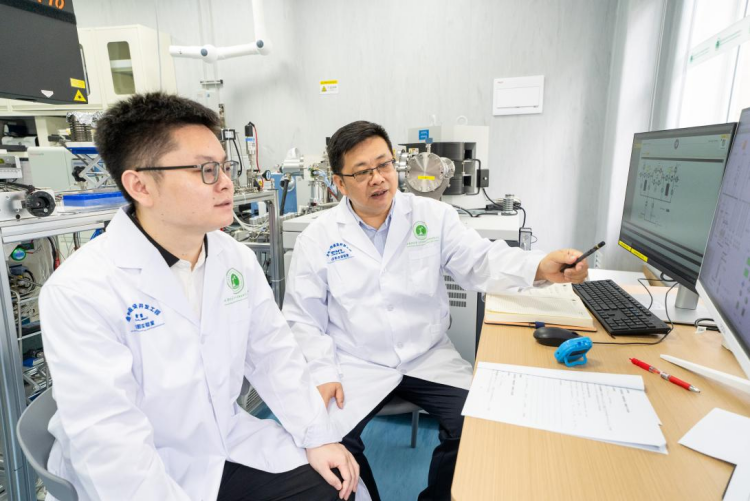
Li Chao (right) Guiding Wang Haiyang (left)
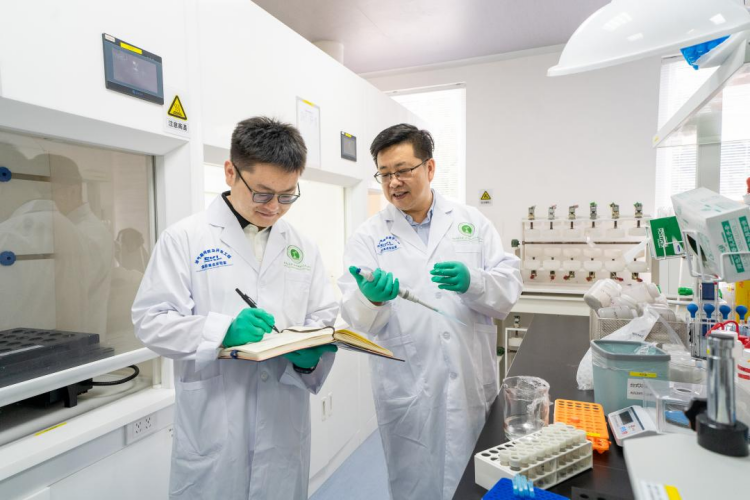
Laboratory Analysis
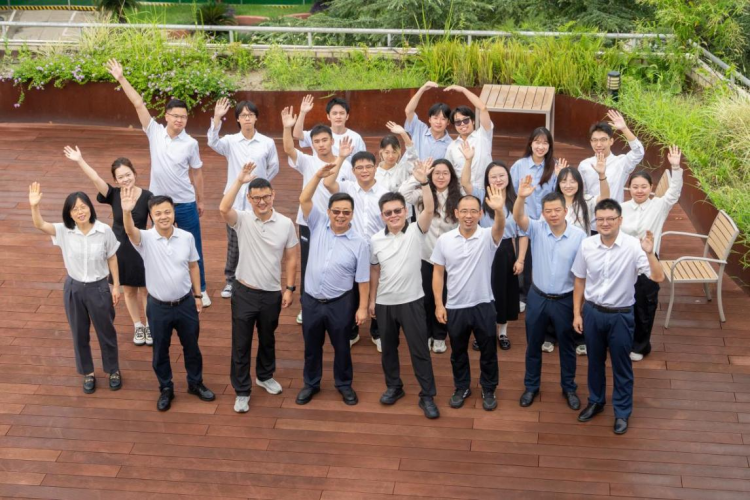
Professor Li Chao’s Team
For CDUT, the team’s repeat success in a leading journal is both proof of its strong research capabilities and a major boost to its ability to attract top talent and expand international influence. CDUT’s unwavering support has been the foundation of the team’s progress, from early investment in lab facilities, to building cross-disciplinary platforms, to sustained research funding, creating a vibrant ecosystem that takes ideas from bold hypotheses all the way to groundbreaking discoveries. This ecosystem has enabled Professor Li’s team to leap from follower to leader, while also driving CDUT’s geology program closer to world-class status.
Just as they decoded the signals hidden in ancient oxygen molecules, Professor Li’s team, together with CDUT, is writing a timeless “Chinese answer” to humanity’s quest to understand Earth’s evolution and to China’s pursuit of scientific progress.