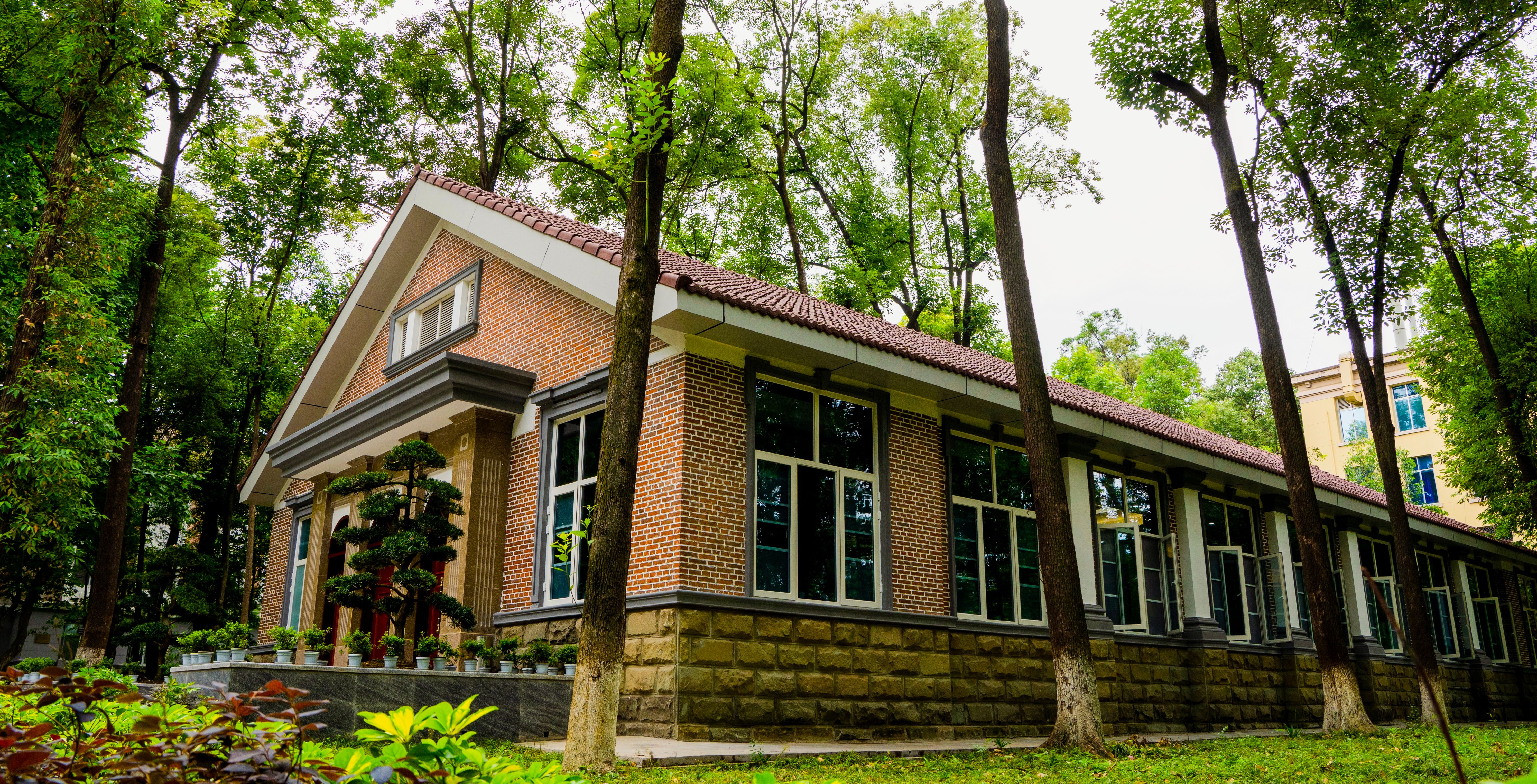
On July 16, 2025, the 8th edition of the “AI Empowering an Intelligent Future” Salon, organized by the Office of Network and Information Technology, was successfully held at Room 3104 of the College of Foreign Languages and Cultures Academic Hall. The event gathered over 100 participants, including President Xu Qiang, Party Committee Standing Members and Vice Presidents Ju Nengpan and Zeng Guoqiang, and members of the CDUT AI Salon community. This session focused on the practical applications of large language models (LLMs) in research and teaching, aiming to deepen exploration into AI-powered academic innovation through sharing and discussions.
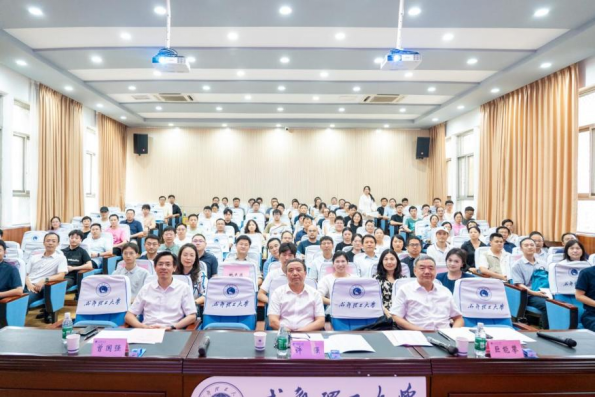
Event site
In his opening remarks, President Xu Qiang emphasized the profound and far-reaching impact of AI on higher education. He encouraged faculty and students to actively engage in AI-related research and practice, to harness AI in scientific research and teaching, and to become pioneers and role models in the age of artificial intelligence.
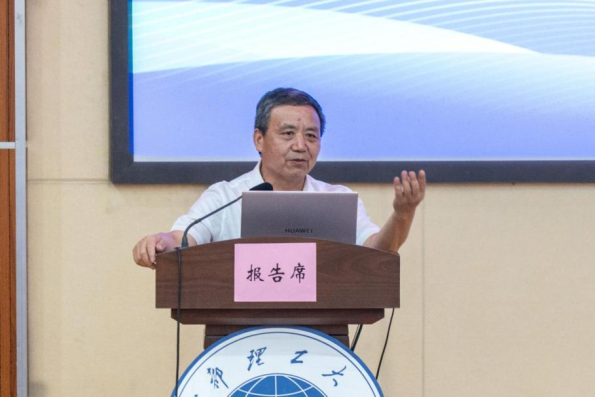
President Xu Qiang Delivering Opening remarks
As part of the event, a ceremony was held to launch tasks under the AI Research Fund. Ju Nengpan read out the official project approval notice. Zeng Guoqiang then presented task assignment letters to nine project leaders under the “Opening Bidding” and laid out specific expectations for project implementation.
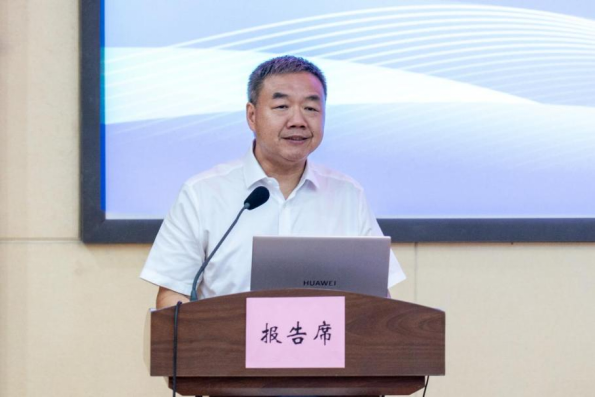
Ju Nengpan announces project approval under the AI Research Fund
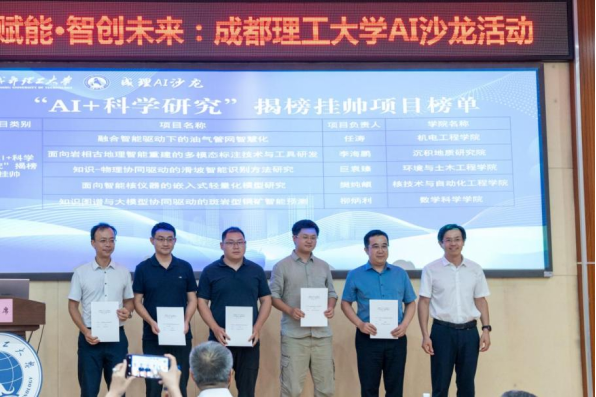
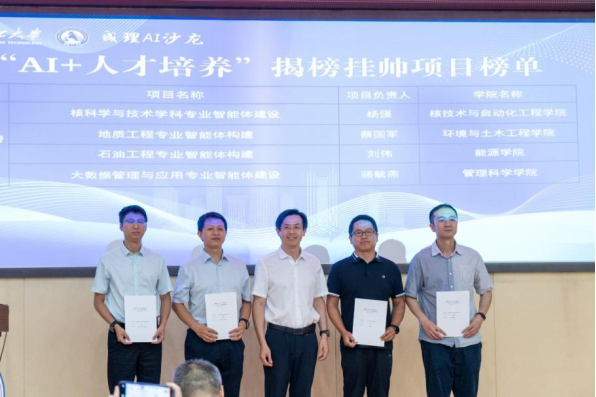
Zeng Guoqiang presents task letters for the "Opening Bidding" projects
During the sharing session, three faculty members from the research group presented their work. Professor Fan Shuai discussed “3D CAD Model Generation and Optimization Driven by Large Language Models,” showcasing how AI can accurately interpret design requirements, automatically generate compliant models, and perform intelligent optimization. Professor Peng Yue shared her insights on “Generative AI in Industrial Design Practice,” highlighting how AI is revolutionizing the industrial design sector. Professor Yao Guangle provided a systematic overview of multimodal dataset generation, large model construction, training, and fine-tuning, detailing the key technologies, challenges, and corresponding solutions. Additionally, two student representatives—Yang Lianjie and Wang Shuang—gave presentations on “Improving Seismic Resilience of High-Speed Rail Tunnels via LLMs” and “Deep Generative Models,” respectively.
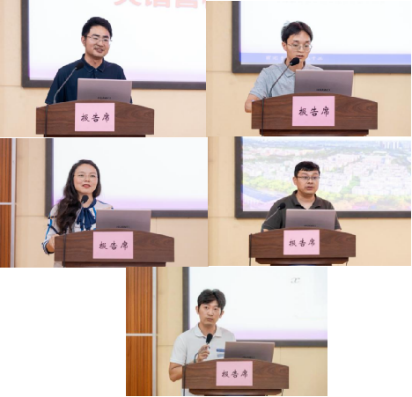
Faculty and student research presentations
Representing the teaching group, Professors Qi Mingming, Dai Xiao’ai, and Huang Yujian explored how AI technologies can enhance classroom teaching, improve student learning efficiency, and assist in instructional management. Through live demonstrations, interactive experiences, and case studies, they showcased innovations such as AI teaching assistants and AI learning tools, along with real-life applications in personalized learning, intelligent assessment, and teaching management.
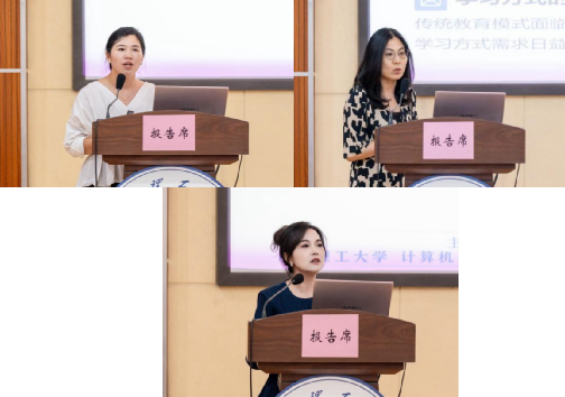
Presentations by the teaching group
In the interactive discussion session, faculty and students held in-depth conversations about the applications of AI in research and teaching. Li Kun, Deputy Director of the Office of Development Planning and Discipline Construction, provided on-site guidance regarding the use of funds under the AI Research Fund.
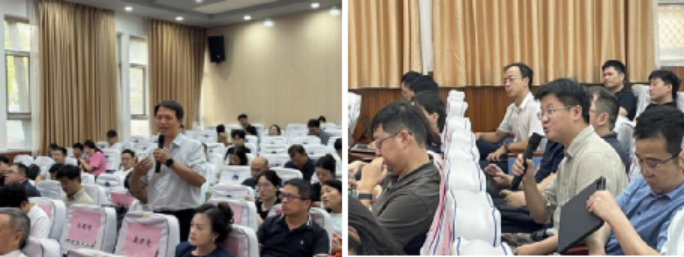
Discussion and Q&A session
President Xu Qiang expressed high praise for the event, urging faculty members to seize the opportunity to actively explore how large model technologies can be deeply integrated into their teaching and research practices. In his closing remarks, he laid out five key directives: First, the two AI study groups should continue organizing future salon events, with a focus on sharing practical case studies of faculty and students applying LLMs to solve real-world problems and enhancing AI literacy across the board. Second, AI Research Fund will prioritize pragmatic and impactful projects, with zero tolerance for formalism. Third, the salon and the research fund should serve as platforms to identify and support outstanding young talents in the AI field. Fourth, future salons should emphasize hands-on demonstrations, enabling more faculty to apply what they learn. Fifth, research outcomes should feed back into teaching, helping students develop the skills to leverage AI in their own academic work.
The salon concluded on a high note, filled with lively discussions and exchanges of ideas. Through in-depth sharing and collaborative dialogue, the event significantly enhanced participants' understanding of large model technologies and intelligent agents, sparked new ideas for innovation, and laid a solid foundation for building AI-driven models of teaching and research.