On March 18, 2025, CDUT celebrated the inauguration of its AI Salon, an event hosted with distinction at the lecture hall of the State Key Laboratory of Geohazard Prevention and Geoenvironment Protection. The ceremony attracted a notable assembly, including President Xu Qiang and Zeng Guoqiang, a member of the Standing Committee of the Party Committee of CDUT and Vice President, alongside leading experts and scholars in relevant fields. They were joined by heads of various departments and colleges, AI Salon members, and over 260 student representatives.
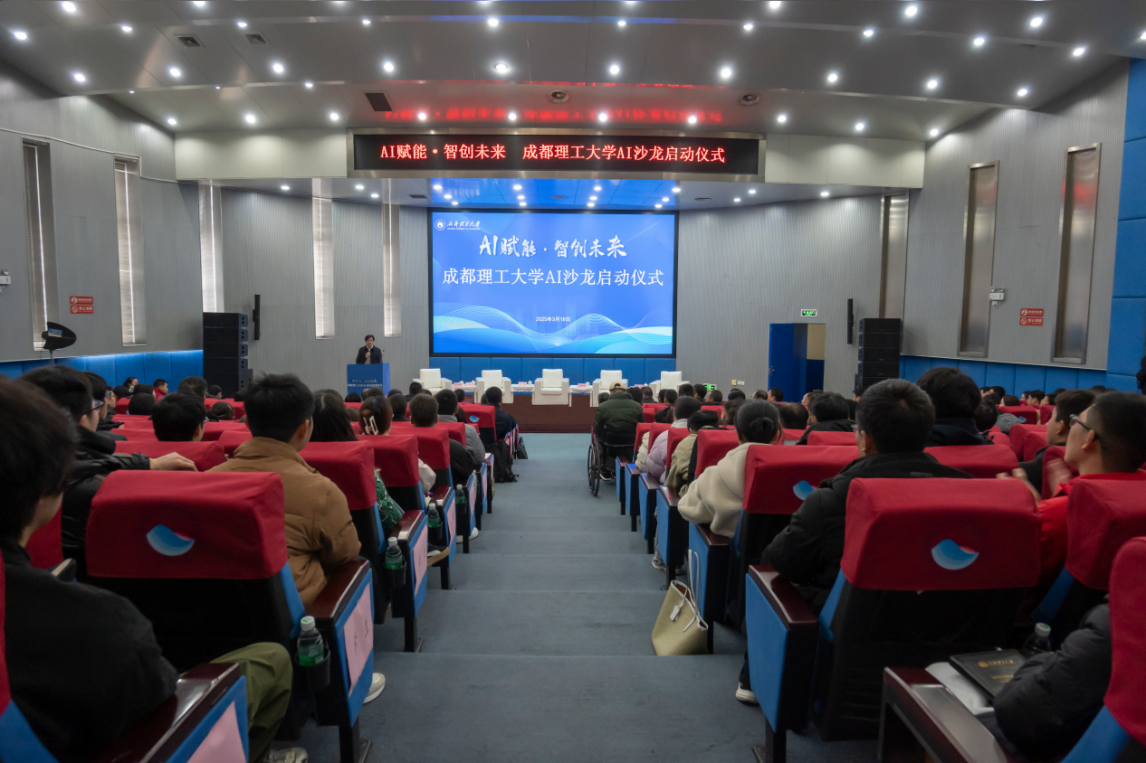
During the launch ceremony
In his opening remarks, Xu Qiang noted that higher education now stands at a crossroads, confronted by both remarkable opportunities and profound challenges. Artificial intelligence, he observed, represents not merely a technological breakthrough but a transformative force reshaping the very foundations of the educational ecosystem and its core values. Reflecting on CDUT’s strides in digital transformation, Xu cited CDUT’s efforts in upgrading smart classrooms, establishing high-performance computing infrastructure, and launching platforms such as “Wenqu Academy” and the AI-driven assistant “Zhi Xiaoli.” These initiatives, he noted, underscore CDUT’s steady march toward the modernization of education. In this era of sweeping technological change, Xu said, we find ourselves at the crest of history, entrusted with a mission that speaks to our time. He urged the CDUT community to rise to the occasion: to embrace the moment, embark on new journeys, push the boundaries of scientific discovery, and foster cross-disciplinary innovation at an accelerated pace.
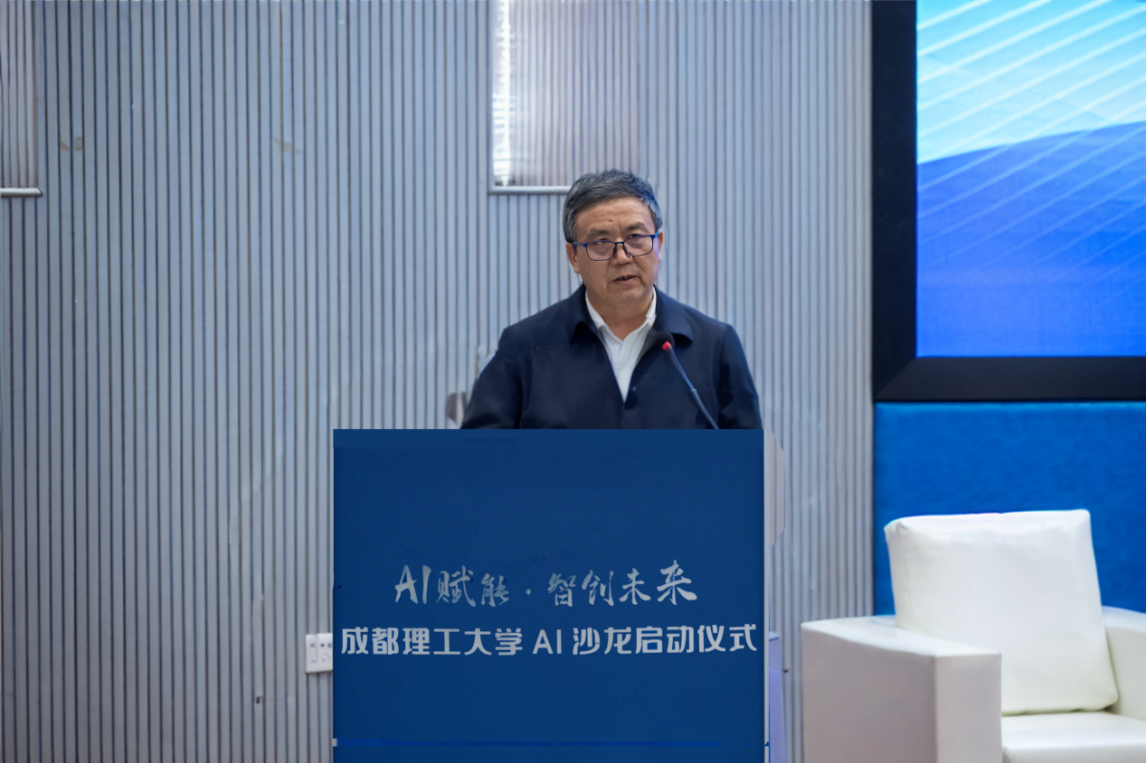
Xu Qiang delivering a speech
Zeng Guoqiang introduced CDUT’s strategic Action Plan for AI-Driven Innovation and Development (2025–2030). Under the plan, CDUT will establish a central AI hub, comprising three specialized sub-centers dedicated to AI research, AI-integrated teaching, and AI digital governance. The initiative lays out twelve priority tasks and thirteen targeted measures, all geared toward building a robust AI infrastructure. At the heart of the plan are three integrated systems: an “AI + Disciplinary Innovation Framework,” an “AI + Talent Cultivation System,” and an “AI + Digital Governance Model.” Together, these will underpin CDUT’s efforts to harness next-generation artificial intelligence in advancing academic innovation, transforming educational practices, reshaping scientific research paradigms, and enhancing the efficiency and quality of institutional governance, marking a comprehensive shift toward high-quality, innovation-led development.
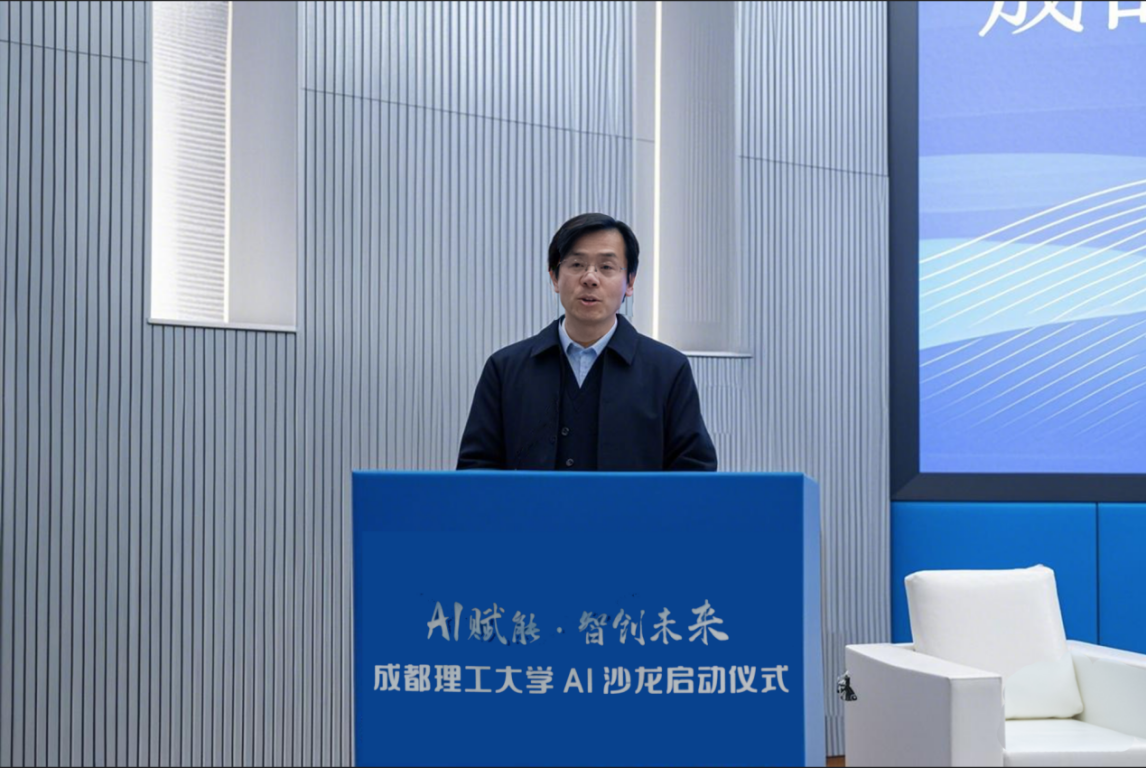
Zeng Guoqiang introducing the CDUT’s strategic Action Plan for AI-Driven Innovation and Development (2025–2030)
The launch event also featured a series of expert presentations and a roundtable discussion. Professor Zhou Fan from the University of Electronic Science and Technology of China delivered a talk on Large Model Foundations and DeepSeek Applications, offering insights into the underlying technologies and practical use cases of large-scale AI models. Yan Hairong, a researcher at Tsinghua University, showcased cutting-edge developments in biomedical AI with his presentation on Foundational Models in Life and Medical Sciences. Professor Tang Xianfeng of Zhejiang University examined AI’s transformative impact on education, drawing from the case study “Mr. ZJU” and the New Smart Education Ecosystem. CDUT’s own faculty contributed to the dialogue as well. Professor Ma Chao presented on “AI- and Big Data-Driven Geoscience Research,” while Professor Ren Tao discussed “AI Applications in Oil and Gas Engineering.” Their talks illustrated how artificial intelligence is being deployed to revitalize traditional academic disciplines and industrial sectors. The roundtable segment prompted lively exchanges among attending scholars, who explored the theme “AI as a Catalyst for Research Paradigm Shifts and Scientific Innovation.”
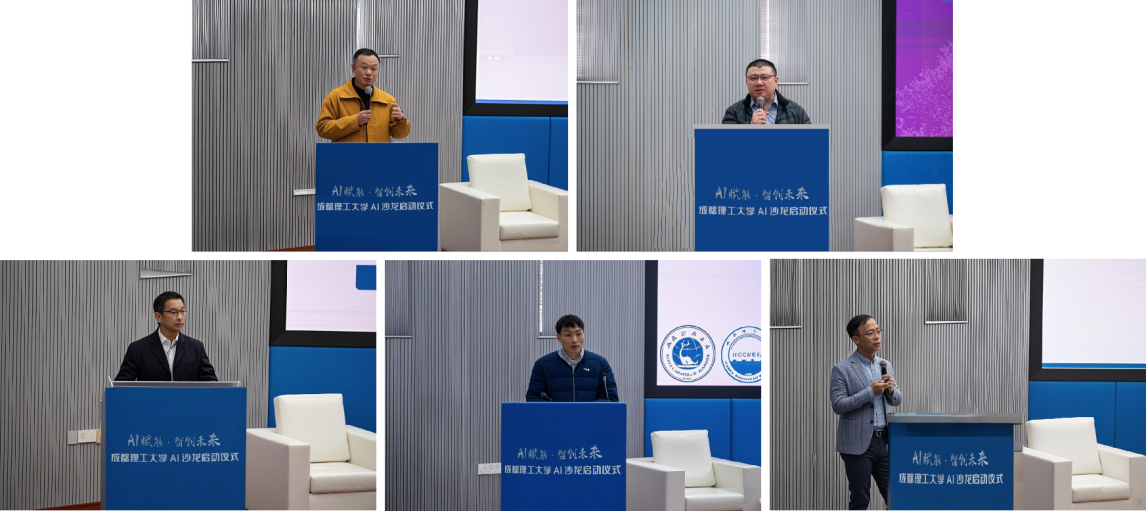
Experts presenting reports
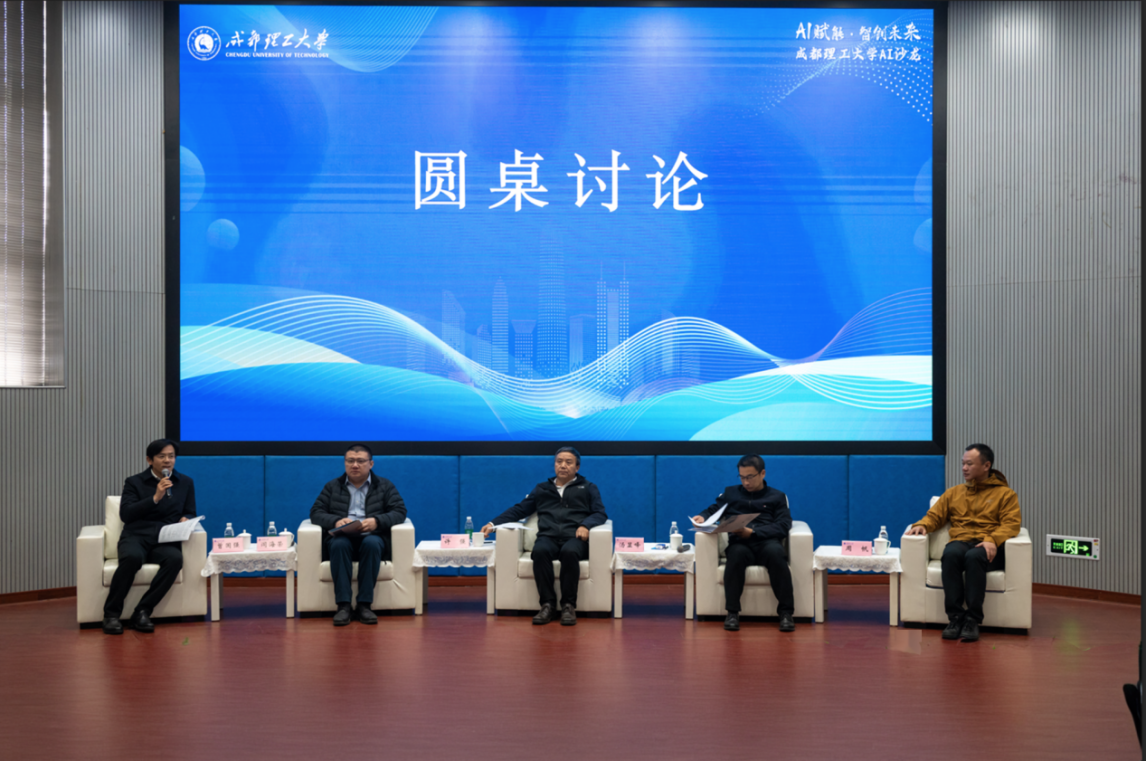
Roundtable discussion
In his closing address, Xu Qiang underscored artificial intelligence as the driving force at the heart of the latest technological revolution. As a university designated under China’s Double First-Class Initiative, CDUT must seize the strategic opportunities presented by AI and fully harness its potential to accelerate high-quality institutional development. Xu laid out two key imperatives. First, he called for a fundamental shift in mindset. In the age of AI, faculty must move beyond entrenched ways of thinking, proactively adapt to technological change, and embrace the paradigm shift with openness and resolve. He urged educators to become trailblazers and hands-on innovators, discarding any tendency toward passive compliance. Second, Xu emphasized the need to construct a robust and integrated policy framework to support the action plan. This includes clarifying responsibilities, coordinating resource allocation, and refining mechanisms for evaluation and incentive—all aimed at ensuring that the plan translates into meaningful outcomes.
The AI Salon signifies the official launch of CDUT’s comprehensive implementation phase for AI-enabled development. It not only consolidates a shared vision for building a smarter educational ecosystem but also outlines a clear roadmap for institutional transformation. Looking ahead, CDUT will align closely with China’s national strategy for digital education.
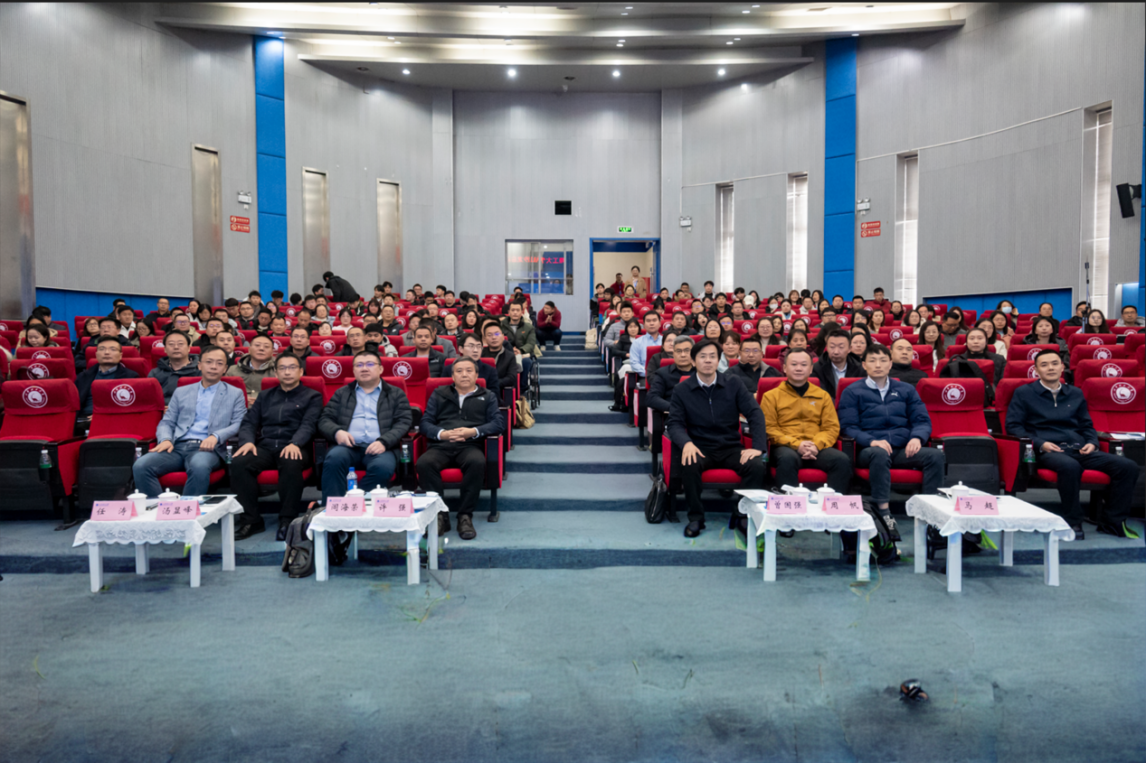
Group photo