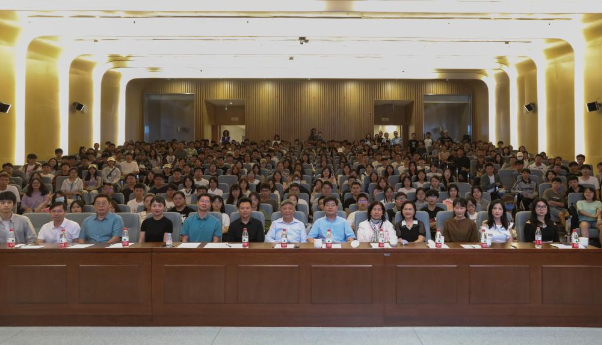
In order to lead students and teachers at the Yibin campus of Chengdu University of Technology (CDUT) to understand discipline frontiers, broaden their academic horizons, stimulate innovative thinking and promote interdisciplinary integration, CDUT invited Wang Chengshan, an academician of the Chinese Academy of Sciences, to give an academic lecture titled Challenges and Opportunities of the Digital Revolution at the Yibin campus on the morning of September 22nd. The lecture was presided over by Hou Mingcai, member of the Standing Committee of the Party Committee and vice president of CDUT.
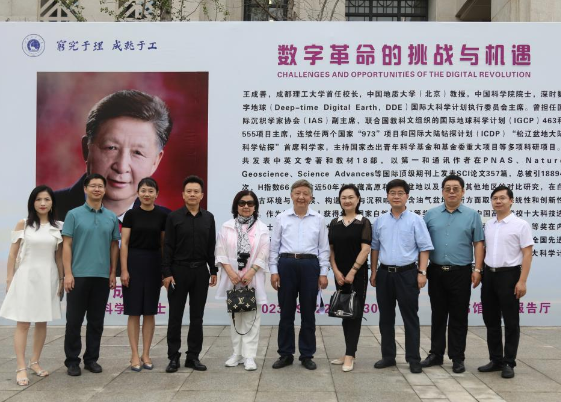
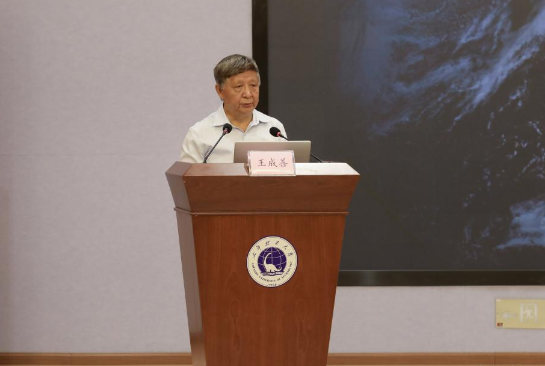
Hou Mingcai expressed gratitude to Academician Wang Chengshan for his deep caring for the development of CDUT and the growth and accomplishment of its students on behalf of CDUT. Around the challenges and opportunities of the digital revolution, Academician Wang Chengshan began his lecture by discussing profound changes unseen in a century and then he talked about changes in the natural environment and the development of human society, stating that we are currently in a digital revolution. He interpreted the connotation of the digital revolution, its development trends and how to meet the challenges it brings through detailed examples and using the latest information. His lecture was rich in content, engaging and compelling.
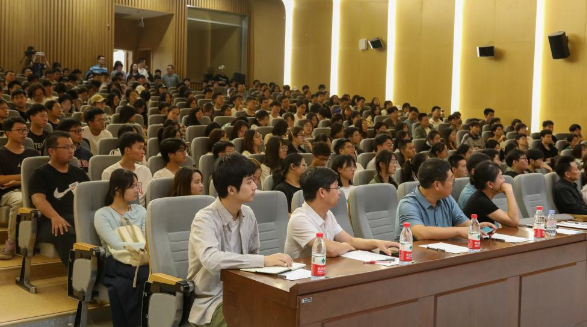
Academician Wang Chengshan stated that over the past 50 years, the digital world has grown to become the key to social functioning, the digital revolution is in progress at an incredible pace and conventional mental labor will be easily replaced by algorithms; specifically, as AI capabilities continue to strengthen, large language models (LLMs) will gradually replace human work by beginning from conventional mental work such as financial and legal services and software outsourcing. Academician Wang Chengshan further elaborated on the challenges posed by the digital revolution and China's response strategies and directions, and he encouraged everyone to exert their own advantages to cope with the challenges of the digital revolution by using specific cases such as Hangzhou City Brain, Zhejiang University and Deep-time Digital Earth (DDE).
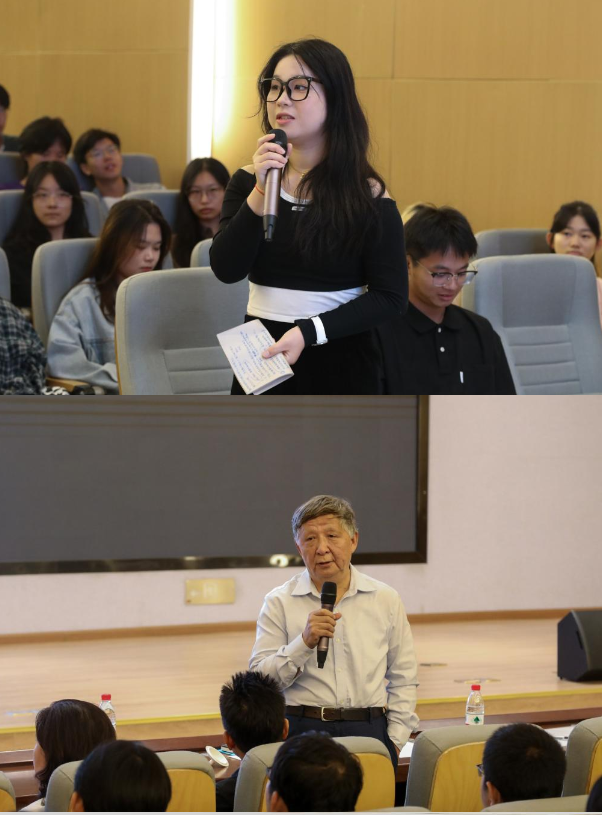
After the lecture, students actively asked questions and exchanged views on issues such as the digital revolution and the development of AI. According to his own experiences, Academician Wang Chengshan answered the students' questions and encouraged students to reflect on the impact of digital technology on human cognition and behavior in their digital life practice, keep adapting to the new era, new technologies and new developments, seize the initiative in information acquisition and digital world navigation, become challengers in scaling the peaks of technology, promote sci-tech progress and empower digital technology.
Profile of Wang Chengshan: Wang Chengshan is the first president of CDUT, a renowned geologist, a geology educator and an academician of the Chinese Academy of Sciences. Academician Wang has long been committed to research on the uplift of the Qinghai-Tibet Plateau and global changes. He served as vice chair of the International Association of Sedimentologists, chair of the International Geoscience Programme (IGCP) Project 463 and Project 555 and chief scientist for two consecutive national Program 973 projects and the International Continental Scientific Drilling Program. He has led multiple major scientific research projects of the National Science Fund for Distinguished Young Scholars, National Natural Major Projects and Basic Science Center Projects. He initiated and is implementing China's first international big science program, the Deep-time Digital Earth (DDE) International Big Science Program, and has led a national major deep earth exploration program. He has published 18 monographs and textbooks in Chinese and English and published 357 high-level papers. Further, he won more than 10 awards such as the Second Prize of the National Natural Science Award (first place), the Top Ten Scientific and Technological Advances of Colleges and Universities in China, the Science and Technology Award of the Ministry of Land and Resources, the Science and Technology Progress Award of the Ministry of Education, and the First Prize of the Science and Technology Award of Tibet Autonomous Region. He also won honors such as the Li Siguang Award, National Excellent Teacher, National May 1st Labor Medal, National Advanced Worker and Fellow of the Geological Society of America.